

Well Water System
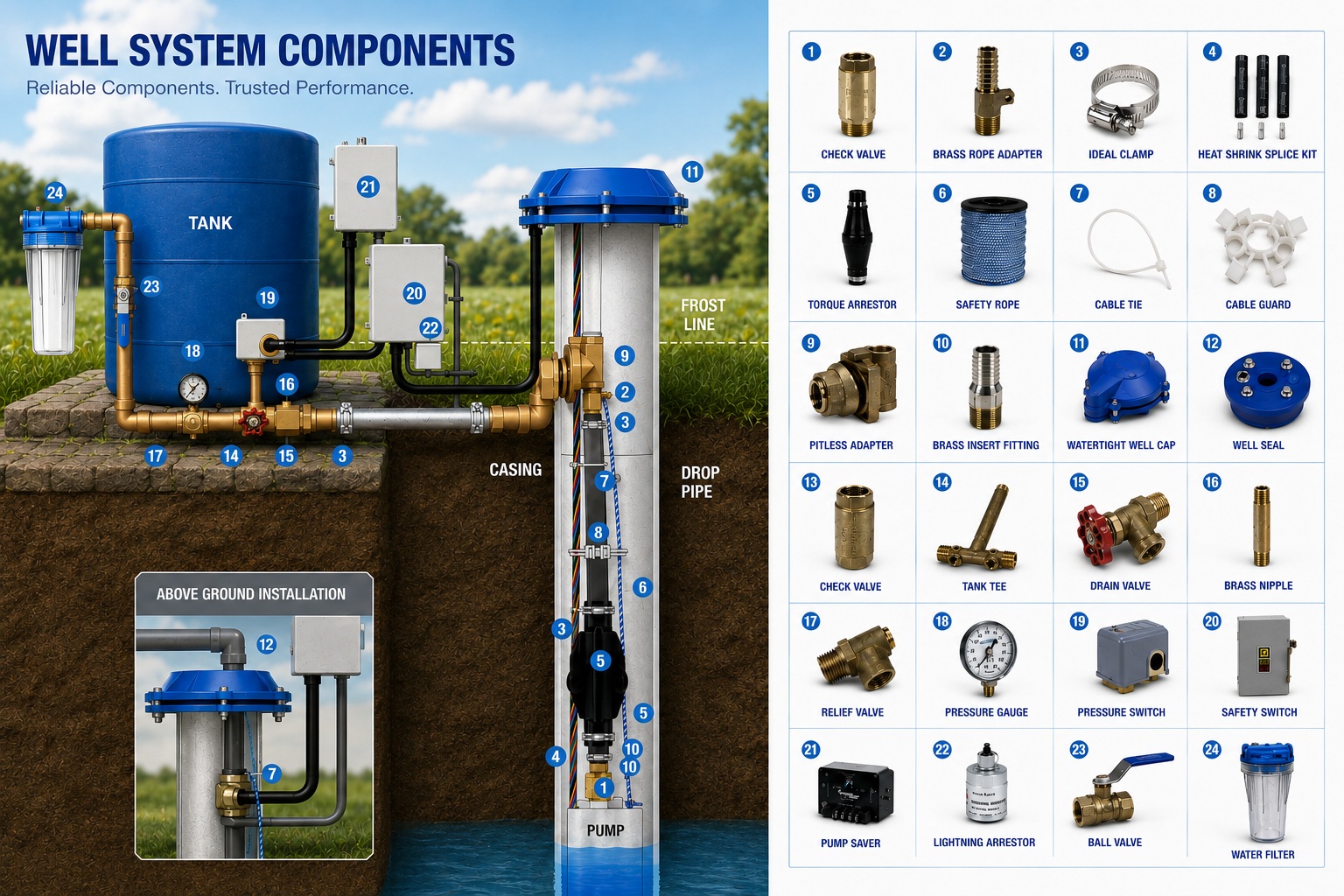
Well Water System Components: Parts, Functions & Selection Guide
A reliable well water system depends on more than a properly sized pump. Components such as the pitless adapter, drop pipe, check valve, tank tee, pressure gauge, torque arrestor, and fittings must work together to deliver water safely and consistently.
For installers, distributors, OEM buyers, and water-system professionals, selecting the right well water system components requires more than comparing size and price. Thread standards, materials, pressure ratings, water conditions, installation requirements, and applicable regulations must all be considered.
Main Well Water System Components
|
Component |
Main Function |
Key Selection Factors |
|
Submersible Pump |
Moves groundwater from the well |
Well depth, flow rate, head |
|
Drop Pipe |
Carries water upward from the pump |
Size, material, pressure |
|
Pitless Adapter |
Connects the drop pipe to the underground water line |
Casing size, connection, material |
|
Check Valve |
Helps prevent reverse flow |
Size, pressure, flow, material |
|
Foot Valve |
Provides one-way flow in applicable systems |
Pump type, size, material |
|
Tank Tee |
Connects the pressure tank and accessories |
Port configuration, thread, length |
|
Pressure Gauge |
Displays system pressure |
Pressure range, connection size |
|
Torque Arrestor |
Stabilizes the pump and drop pipe |
Casing diameter, pipe size |
|
Fittings & Adapters |
Connects pipes, valves, tanks, and accessories |
Size, thread, material |
In a typical submersible pump system, the pump moves groundwater through the drop pipe. Water exits the well casing through the pitless adapter, travels through the underground water line, and reaches the pressure tank and building distribution system. Check valves or foot valves help control flow direction, while the tank tee connects the pressure tank with accessories such as a pressure gauge, pressure switch, relief valve, or drain valve.
Pitless Adapters
A pitless adapter creates a sanitary below-ground connection between the drop pipe and underground water line. Installed below the local frost depth, it helps protect the water line from freezing and allows the pump and drop-pipe assembly to be removed from above the well for servicing.
When selecting a pitless adapter, verify:
- Well casing size
- Inlet and outlet connection sizes
- Thread standard
- Installation depth
- Body material
- Pressure requirements
- Water conditions
- Applicable regulations
Adapters with similar external dimensions are not always interchangeable. Differences in threads, sealing surfaces, or connection dimensions can affect compatibility. Taiwan Kingbird offers lead-free bronze/brass and Type 304 stainless steel pitless adapters in multiple sizes, including OEM and custom designs.
Tank Tees
A well tank tee serves as a connection hub at the pressure tank. Depending on the design, it may provide ports for a pressure gauge, pressure switch, relief valve, drain valve, and other accessories.
Before ordering, confirm the tank connection, main and branch port sizes, thread standards, overall length, body material, and port configuration. For replacement or OEM projects, a drawing or physical sample helps prevent incorrect quotations and manufacturing errors.
Check Valves and Foot Valves
A check valve allows water to flow in the intended direction and helps prevent reverse flow when the pump stops. A foot valve also provides one-way flow control and is commonly used in specific pump and suction-line arrangements.
Selection should be based on:
- Installation location
- Flow direction
- Nominal size
- Connection and thread type
- Operating pressure
- Flow capacity
- Water quality
- Valve and internal materials
Incorrect installation direction, debris, incompatible threads, or unsuitable pressure conditions may prevent proper opening and sealing.
Pressure Gauges and Torque Arrestors
A well water pressure gauge helps installers monitor system pressure during startup, shutdown, and normal operation. When selecting one, consider pressure range, connection size, thread, dial size, accuracy, and installation environment. A gauge is a monitoring tool, not a complete diagnostic system; abnormal pressure may result from the pump, tank, valves, piping, controls, leaks, or the gauge itself.
A submersible pump can create torque during startup, causing the pump and drop pipe to move inside the casing. A rubber torque arrestor helps stabilize the assembly and reduce contact between the pump, piping, electrical cable, and casing. Selection depends on casing diameter, drop-pipe size, pump configuration, and installation depth. It should be correctly positioned and adjusted rather than simply overtightened.
Fittings and Thread Compatibility
Well water fittings include couplings, elbows, adapters, bushings, connectors, and other pipe fittings. Buyers should verify nominal size, male or female connection, thread standard, material, sealing method, pressure rating, connected pipe material, and installation environment.
NPT and G/BSP-type threads are different systems and should not be treated as interchangeable simply because their nominal sizes appear similar. Forcing incompatible threads together can damage the connection and cause leakage. For replacement or OEM parts, provide the original drawing, thread specification, model number, or physical sample whenever possible.
Brass vs. Stainless Steel Well Water Components
Lead-free bronze/brass and stainless steel are both used in well water components, but the best choice depends on the application.
Lead-free bronze/brass may offer good machinability, reliable threaded connections, proven water-system performance, and cost-effective production. Stainless steel may be preferred for projects requiring higher corrosion resistance, greater mechanical strength, or stainless construction. Type 304 stainless steel is commonly used, although other grades may be appropriate for specific water conditions.
Material selection should consider water chemistry, corrosion exposure, pressure, mechanical requirements, connected piping, regulations, maintenance, and budget. Buyers should also distinguish between lead-free material requirements and third-party drinking-water certification. A lead-free claim does not automatically indicate a specific certification.
Why Do Well Water Components Fail?
Well water components may fail prematurely because of:
- Incorrect size or thread standard
- Improper valve orientation
- Incompatible materials
- Overtightened connections
- Incorrect sealing methods
- Excessive pressure
- Debris inside valves
- Pump movement or cable abrasion
- Corrosive water
- Improper installation
- Insufficient inspection or maintenance
Reliable performance depends on product quality, correct selection, proper installation, and actual operating conditions.
OEM and B2B Sourcing Considerations
When requesting a quotation, buyers should provide product type, installation location, connection sizes, thread standards, material requirements, pressure and temperature, flow conditions, water quality, certifications, order quantity, testing, packaging, labeling, and private-label requirements.
For custom parts, 2D drawings, 3D models, technical specifications, or physical samples are highly recommended. OEM development may involve material selection, critical dimensions, tolerances, threads, sealing surfaces, casting or forging, machining, finishing, inspection, assembly, and packaging.
Taiwan Kingbird provides standard and custom well water components in lead-free bronze/brass, stainless steel, and other materials according to project requirements. Its capabilities include R&D, casting, brass forging, bar-stock machining, stamping, plastic injection molding, CNC machining, finishing, inspection, assembly, and packaging.
Frequently Asked Questions
What are the main components of a well water system?
A typical system includes a pump, drop pipe, pitless adapter, check valve or foot valve, underground water line, pressure tank, tank tee, pressure gauge, controls, fittings, and a torque arrestor.
What does a pitless adapter do?
It connects the drop pipe to the underground water line below ground, helps protect against freezing, and allows pump removal for servicing.
What does a torque arrestor do?
It helps control movement caused by submersible pump startup torque and reduces contact with the well casing.
What does a check valve do in a well water system?
A check valve allows water to flow in the intended direction while helping prevent reverse flow when the pump stops. The correct type and installation location depend on the pump and overall system configuration.
What is a tank tee used for in a well water system?
A tank tee connects the pressure tank to the water line and provides ports for accessories such as a pressure gauge, pressure switch, relief valve, or drain valve, depending on the configuration.
Can well water components be custom manufactured?
Yes. OEM components can be developed from drawings, specifications, 3D models, or physical samples after evaluating materials, dimensions, tolerances, threads, testing, and production requirements.
A dependable well water system requires components that match the application—not simply parts with similar appearances or nominal sizes. By confirming function, dimensions, thread standards, materials, pressure ratings, and operating conditions, buyers can improve system reliability and reduce installation and maintenance problems.
Looking for Well Water Components or OEM Manufacturing Support?
From pitless adapters, tank tees, check valves, foot valves, pressure gauges, and torque arrestors to related well water fittings, each component should be evaluated according to its function, dimensions, thread standard, material, operating conditions, and market requirements.
With more than four decades of experience in water well and plumbing supplies, Taiwan Kingbird provides standard and custom well water components in lead-free bronze/brass, stainless steel, and other materials depending on product requirements.
For OEM and custom projects, our team can evaluate customer drawings, specifications, 3D models, or physical samples to determine suitable materials and manufacturing processes.
Contact Taiwan Kingbird to discuss product availability, request a quotation, or evaluate an OEM well water component project.